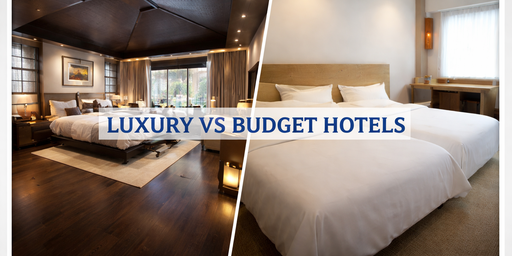
The U.S. hotel industry continued to show a clear performance split across property classes in 2025—luxury held firm, while the economy segment struggled.
On the high end, travelers with the ability to keep spending supported premium stays and helped drive luxury RevPAR growth. On the budget end, households feeling more pressure pulled back on discretionary trips, weighing on limited-service and economy performance.
- Luxury hotel RevPAR increased 3%
- Economy hotel RevPAR declined 4.4%
- U.S. air arrivals fell 4.2% year over year
A "K-Shaped" Backdrop
Economists have described the U.S. economy as "K-shaped," with higher-income households continuing to fare well while lower-income households fall behind. For upper-income consumers, strong stock portfolios and home values can translate into discretionary spend—often including upscale travel.
For lower-income travelers, inflation-driven pressure on essentials typically pushes travel down the priority list. That dynamic tends to show up first in more affordable hotel tiers, particularly limited-service properties.
Luxury Maintains Pricing Power
In 2025, luxury operators largely maintained their ability to push rate. Average rates rose about 3% even as occupancy remained roughly flat versus 2024. In other words: luxury hotels were still able to charge more because guests continued to perceive strong value in the experience.
Corporate and International Demand Softened
Business travel also showed signs of cooling. Following the April tariff announcements, some companies became more cautious with budgets—particularly for group and transient travel. By December, the U.S. hotel industry had logged nine consecutive months of declining group room demand and inconsistent midweek performance, both signals that corporate momentum was uneven.
International inbound travel softened as well, with U.S. air arrivals down 4.2% year over year. At the same time, strong cruise demand may have siphoned off some leisure trips that might otherwise have been hotel stays.
What This Means for 2026
Looking ahead, we expect the high-end versus low-end divide to persist. Our outlook continues to show RevPAR growth for luxury, while limited-service properties are likely to see minimal gains—and the economy segment is expected to cool further.
There will be bright spots. The FIFA World Cup in June and July should deliver meaningful compression and rate lift in the 11 host cities on (and around) match days. In addition, the holiday calendar sets up multiple long weekends that could encourage short getaways.
Even so, those demand spikes may not be enough to fully lift what still appears to be a muted year for overall U.S. hotel performance, especially for properties serving price-sensitive travelers.